Duplex power connection in Parramatta: planning the supply from demolition to handover
How the supply works when you knock down and build a duplex in Parramatta, from disconnection and site power to three phase and the final connections.
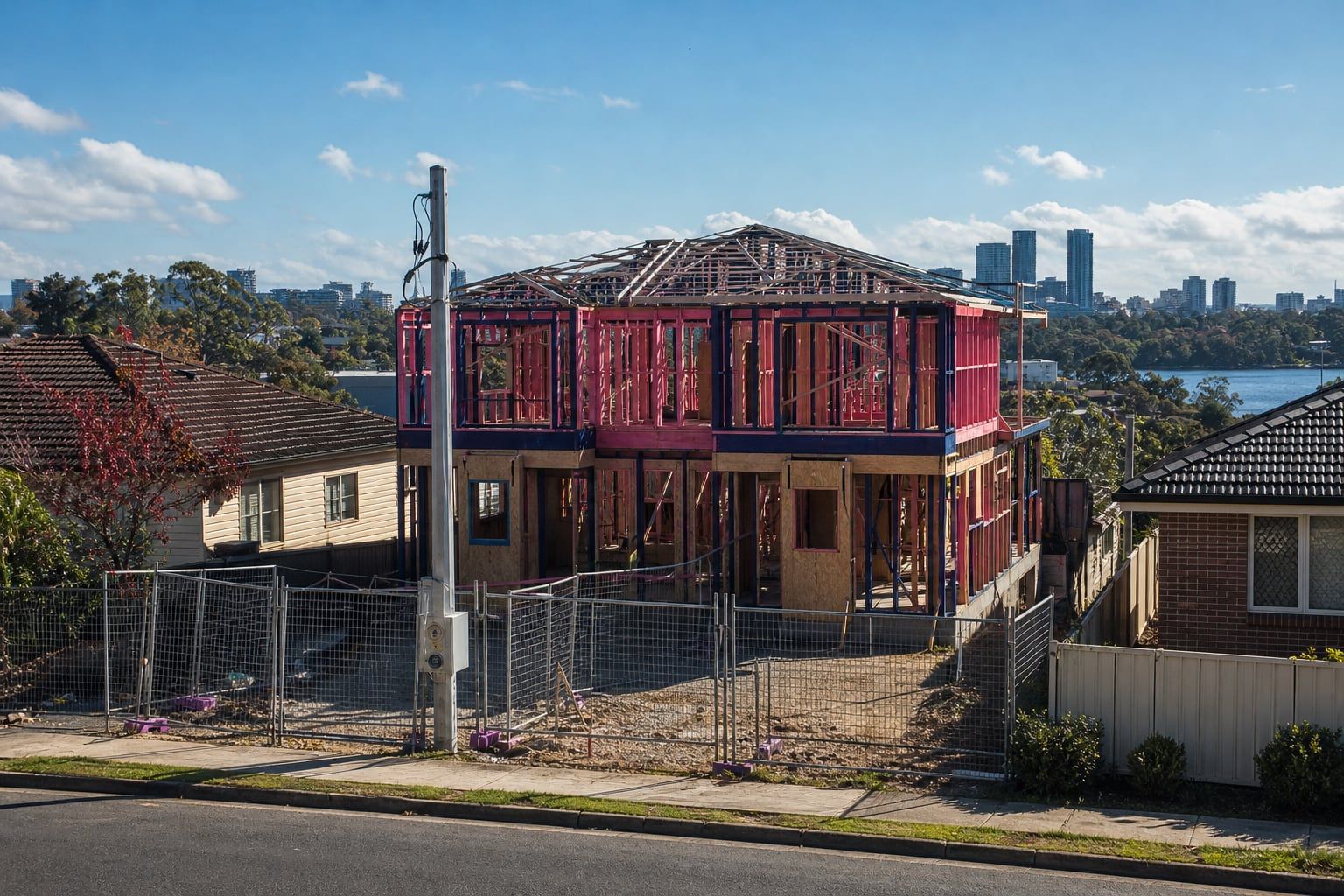
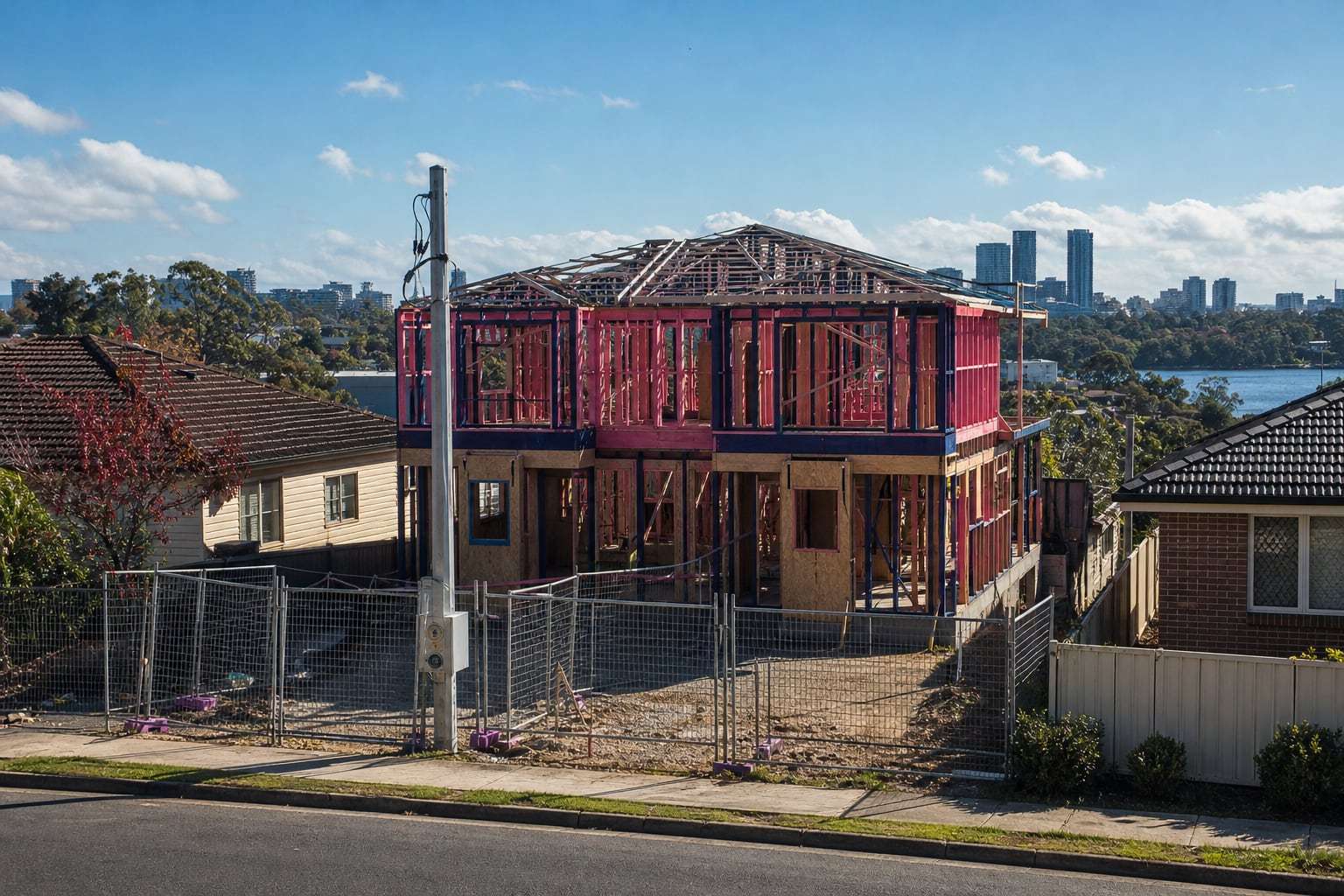
Parramatta and the Cumberland suburbs around it are full of duplex projects. An old house on a wide block comes down, and two new homes go up. The building side gets plenty of attention. The power side often doesn’t, until handover is a week away and nobody has lodged the paperwork. This guide walks through the duplex power connection process from start to finish so it doesn’t hold up your build.
Step 1: Plan the supply before demolition
Before the old house comes down, decide how the new homes will be supplied:
- Single or three phase for each side? If either side will have EV charging, a big solar system, a battery or ducted air conditioning, three phase is worth considering.
- Overhead or underground? Most Parramatta streets are overhead. Many duplex owners choose underground supply so the new facades are clean and the second storeys aren’t fighting a service line.
- Where will the meter boards go? Each dwelling needs its own. Their position affects cable routes and costs.
Talk to your builder, your electrician and us at this stage. It’s the cheapest time to get it right.
Step 2: Lodge the applications early
The network needs a connection application for the new homes. Across most of Parramatta that’s Endeavour Energy; on the eastern edge around Epping it can be Ausgrid. Applications take time, especially for three phase or underground supply. Lodge them as soon as plans are settled, not when the frame is up.
Step 3: Disconnect the old house
The existing supply must be permanently disconnected before demolition. The service is removed and the retailer takes the meter. Book a power disconnection and reconnection a week or two before the demolition date. Demolishers can’t start until it’s done.
Step 4: Site power
The trades need power from the first day. A temporary builders supply goes in on the same visit as the disconnection: a temporary pole on overhead streets, or a site board at the pit on underground ones. One site supply usually serves the whole duplex build.
Place it where it won’t need to move. On narrow Parramatta blocks that means away from the slab, the driveways and the scaffold line.
Step 5: Underground conduit during the build
If the new homes will be supplied underground, the conduit needs to go in before driveways are poured and landscaping starts. We coordinate with the builder so the trench happens at the right stage. See overhead to underground conversion for how it works on an overhead street.
Step 6: Three phase, if you need it
If the application includes three phase, the new mains are three phase and the retailer installs three phase meters. Your electrician sets up the switchboards. See our three phase power upgrade page for what it involves.
Step 7: Handover connections
When the meter boards are ready and the applications approved, we connect each dwelling, test and certify. The temporary supply comes out. Each owner gets a certificate of compliance for their connection.
Common hold-ups
- Applications lodged late. The biggest cause of homes sitting finished without power.
- No retailer account. Each dwelling needs its own account before the meter is installed.
- Site power in the wrong spot. Moving it mid-build costs time and money.
- Single phase ordered when three phase was needed. Upgrading later means another application and more work.
- Conduit forgotten. Discovered after the driveway is poured.
Strata title and Torrens title
Whether the duplex is strata or Torrens titled can affect how the supply is arranged. Tell us early so the applications reflect the final title arrangement.
Granny flats behind duplexes
Some owners add a secondary dwelling at the rear. If that’s in the plan, include it in the load calculation now. Adding it later can mean a second upgrade.
A simple timeline
| Stage | Power task |
|---|---|
| Plans approved | Decide phase and route; lodge applications |
| Two weeks before demolition | Book permanent disconnection and site power |
| Demolition to frame | Build runs on site power |
| Before driveways | Underground conduit in, if used |
| Meter boards ready | Connections made, certificates issued |
Who does what
Your builder runs the program and books trades. Your electrician designs the switchboards and circuits for each home. We handle everything between the network and the meter boards: disconnection, site power, applications, undergrounding, mains and connections. Your retailer installs the meters. Getting all four talking early is what keeps handover on time.
Budgeting the power side
Allow for the disconnection, site power, any undergrounding, new mains for each dwelling and the final connections. We give a fixed price for each stage at the start so the builder can include it in the contract.
Getting help
Call the level 2 electrician Parramatta team when your plans are approved. We’ll map out the power side of the build and give you a fixed price for each stage. If you’re adding a level rather than rebuilding, our guide to second storey addition power covers what changes.
Updated
Duplex power connection in Parramatta: common questions
Something else on your mind? Call 02 9158 9915 and ask.
When should we start the power side of a duplex?
As soon as plans are approved. Applications can take weeks, and you want them approved before handover.
Does each side of the duplex get its own meter?
Yes. Each dwelling gets its own connection and meter at handover.
Can the duplex be supplied underground from an overhead street?
Yes. The cable runs down the street pole in conduit and underground to each meter board.